Arena Combat
Arenas
Two fighters against two, in a closed arena, with a rating on the line and nothing else. No experience is lost, no items drop and no enemy kills are awarded — which is exactly why a pair from Aresden can be matched against another pair from Aresden. Bring a partner, queue up, and find out where you really stand.
And for a score to settle with one player there is the 1v1 duel: you challenge them by name, the two of you agree on the rules, and you can put gold on the line. How duels work.
Getting in
Open your character sheet with F5 and press the Arenas button, then 2v2 Arena. That opens the arena hub whether you are in a party or not, with four tabs: Ladder, History, Season and Titles. To queue you need a party of exactly two — not one, not three — and the Queue for 2v2 button at the foot of the hub stays greyed out while you have no party. From the panel that opens you queue, watch your team rating and record, and leave the queue whenever you like.
- Team size
- 2 A party of exactly two
- Minimum level
- 90 Effective: level + rebirths
- Brackets
- 2 90–139 and 140+
- Bracket rule
- Average Of both effective levels
- Arenas
- 6 Six matches can run at once
The gate is effective level 90, where effective level means your level plus your rebirths — a level 87 character with three rebirths is in. There are two brackets, 90–139 and 140+, and your team's bracket is the average of both partners' effective levels, so a mixed pair lands wherever that average falls. Everybody waits in a single queue; the bracket is applied at the moment two teams are matched, and the six arenas are handed out in order of arrival, so as one frees up the next team goes in.
The matchmaker starts by looking for opponents close to your rating and widens its search the longer you wait, until it will accept anybody. On a quiet evening that means you will get a match — it just may not be a fair one.
The 30-second invitation
When a match is found, all four players get a card with a 30-second countdown and a Confirm button. The card shows up even if you are in the middle of a fight — but confirming does not: you can only accept once you have been out of combat for 15 seconds, standing still for 10 and are visible. While a condition is missing, the button tells you which one, and how many seconds are left when it runs on a clock.
The clock
A match is a minute of preparation and fifteen minutes of fighting, and the second number does not start until the cages open.
| Phase | Lasts | What happens |
|---|---|---|
| Invitation | 30 s | All four confirm, out of combat, standing still and visible. |
| Preparation | 1:00 | Locked in your cage. Buff up — this is the window for it. |
| Fight | 15:00 | The cages open and the clock starts. |
| Celebration | 5 s | The winners are lit up before everyone is sent back to where they entered from. |
You arrive inside a small cage on your side of the map, far enough from the other pair that you cannot see them, and every buff you cast beforehand is stripped on the way in. That is deliberate: the minute in the cage is your buffing window, and you pay for it in mana like everybody else. Casting during preparation is allowed. When the minute is up the cage doors disappear and the fight is on.
How a match ends
You win by putting both opponents on the ground. Nothing else counts — not damage dealt, not health remaining. If both teams still have someone standing at 0:00, the match is a draw and nobody's rating moves.
To keep the last minutes from turning into two healers refusing to die, healing and regeneration lose 20% of their power every three minutes of fighting. The match timer on your screen shows the figure you are currently getting.
| Fight time | Effectiveness |
|---|---|
| 0:00 – 3:00 | 100% |
| 3:00 – 6:00 | 80% |
| 6:00 – 9:00 | 60% |
| 9:00 – 12:00 | 40% |
| 12:00 – 15:00 | 20% |
When the last member of a team falls, the four of you are not yanked out instantly: the winners are lit up for five seconds where they stand, and only then is everyone sent back to the spot they entered from. Anyone who died is revived on the way out.
What you cannot bring
The arena is deliberately stripped down. Consumables are gone, the two spells that would end matches by themselves are gone, and invisibility is rationed. Everything else you have earned — your gear, your talents, your charged wands — comes with you.
| Rule | Status | Detail |
|---|---|---|
| Absolute Magic Protection | Forbidden | Forbidden. The spell is greyed out in your spell list. The Sword of Heavens' special ability, which grants it, is refused too, and not spent. |
| Recall | Forbidden | Forbidden — the spell and the Recall Scroll both. |
| Detect Invisibility Scroll | Forbidden | Forbidden. |
| Detect Invisibility | Allowed | The spell is allowed, and it is your answer to the one above. |
| Invisibility | Limited | 3 uses per player, per match. The spell, the Invisibility Potion and the Invisibility Scroll all draw from the same three. In here it is never ascended: a normal Detect Invisibility always breaks it. |
| Potions and food | Forbidden | No consumables at all — no healing potions, no mana, no food, no Ogre Potion. A Berserk, Health, Mana or Invincible slate already running is paused for the match and picks up with the time it had left when you come out. |
| Zemstone of Rebirth | Forbidden | Forbidden. Nothing drops in here, so there is nothing to save. |
| Resurrection | Forbidden | Forbidden. Whoever falls stays down until the match is over. |
| Wands with charges | Allowed | Allowed. A charged wand casts its spell even if you never learned it. |
| Summoning pets | Forbidden | You fight this one with what you brought. |
| Trading items mid-match | Forbidden | You cannot hand anything to anybody, including your partner. |
Dying, and leaving
Death in the arena is free. You drop nothing, you lose no experience, your killer gains no enemy kill, and the death is not added to your record on the character sheet. There is no kill announcement to the server either — what happens in there stays between the four of you and the ladder.
Logging out is the one thing that costs you. Disconnecting disqualifies you, with 60 seconds of grace to get back — and while you are gone your partner is fighting two against one. Come back inside the minute and the match carries on as if nothing happened. However the match ends for you — a win, a loss, logging out or a disqualification — you come back to the exact spot you entered from.
Rating and the ladder
Every player carries their own rating, calculated with Glicko-2 — the system does not only track a number, it tracks how sure it is about that number, so your first few matches move you a long way and later ones settle down. A team's rating is the average of its two players, which is also what the matchmaker uses to size you up against another pair.
Ratings are kept by season. Seasons last a few months and the next one starts as soon as one ends. Your rating is not wiped: it starts the new season closer to the middle — provided you played at least 10 matches; with fewer you start fresh. Before launch a Pre-Season is played: everything works the same, but it awards no titles. The arena hub shows which season is running, and you need 10 matches in it before you appear on the in-game ladder. The public ladder lists the top pairs with their ratings and records, and you can look yourself up on the Arena Rankings page — it reads straight from the live server.
1v1 duels
Press Arenas on your character sheet (F5) and choose 1v1 Duel. Type the name of the character you want to fight, set the rules and the bet, and press Send. The window does not close: it says Processing... until the server answers, and then shows whose turn it is. You cannot challenge a character from your own account.
Both of you must be level 140 or higher — your level alone, rebirths do not count: a 140 with one rebirth can fight one with thirty. To get the duel going, both must also have gone 15 seconds without fighting another player, be standing still for 10 seconds and be visible. If one of those is missing, the window does not close: it shows what it is waiting for with a countdown and moves on by itself.
The player you challenge gets an invitation with every term on it and has four answers: Accept, Modify and resend it with their own rules or bet, Decline, or Block. Each turn to answer lasts 60 seconds, the terms can go back and forth for at most 10 rounds, and nothing starts until you have both agreed to the same rules and the same bet. Once you agree, the duel waits up to 60 seconds for a free arena; if none frees up, it is called off and nobody pays anything.
Inside, a duel runs on the rules of the 2v2 above: a minute in the cage and fifteen minutes of fighting, a draw at 0:00, the same loss of healing over time, no consumables, no Recall, Resurrection or Zemstone of Rebirth, three invisibilities each, charged wands allowed, and no enemy kill, drop or lost experience. It is fought in one of the six arenas below. What changes: there is no announcer, every activated special ability is forbidden, and the two of you decide these:
| Rule | Status | Detail |
|---|---|---|
| Protection From Magic (PFM) | You agree | Free, up to N per player (N from 1 to 10), or banned. |
| Absolute Magic Protection (AMP) | You agree | Free, up to N per player (N from 1 to 10), or banned. In the 2v2 it is always forbidden. |
| Berserk spells | You agree | Free, up to N per player (N from 1 to 10), or banned. Berserk and Minor Berserk share one count. An angel never casts Berserk in an arena. |
| Protection From Arrow (PFA) | You agree | Free, up to N per player (N from 1 to 10), or banned. |
| Ascended Detect Invisibility | You agree | Yes or no. With this rule, Detect Invisibility is never ascended. |
| Bows | You agree | Yes or no. With this rule, your bow comes off when you enter and cannot be put back on. |
| Activated special abilities | Forbidden | Forbidden in every duel, whatever you agree — the Sword of Heavens' one included. A refused ability is not spent. |
A limit is per player and lasts the whole duel, and only a cast that takes effect counts: a refused or failed one costs nothing. While you have a limit the game tells you how many casts you have left, and the spell turns grey in your spellbook once you have used them all. The INFO button next to the match timer lists everything you agreed.
A draw at 0:00 gives each player their bet back, with no fee, and so does a duel cut short by a server restart, a crash or the staff. Logging out works as in the 2v2: you have 60 seconds to come back, and if you do not, the player who stayed wins the pot. There is no rating, ladder or title in the 1v1 — only the win and the gold.
The six arenas
Six arenas are in rotation, which means up to six matches can be running at the same time. You do not pick one — you are dropped into whichever is free — so it is worth knowing all six. Each one has its own shape, and the shape decides more than you would think: where you can be cornered, whether a mage gets room to work, and how long it takes for the two pairs to meet.
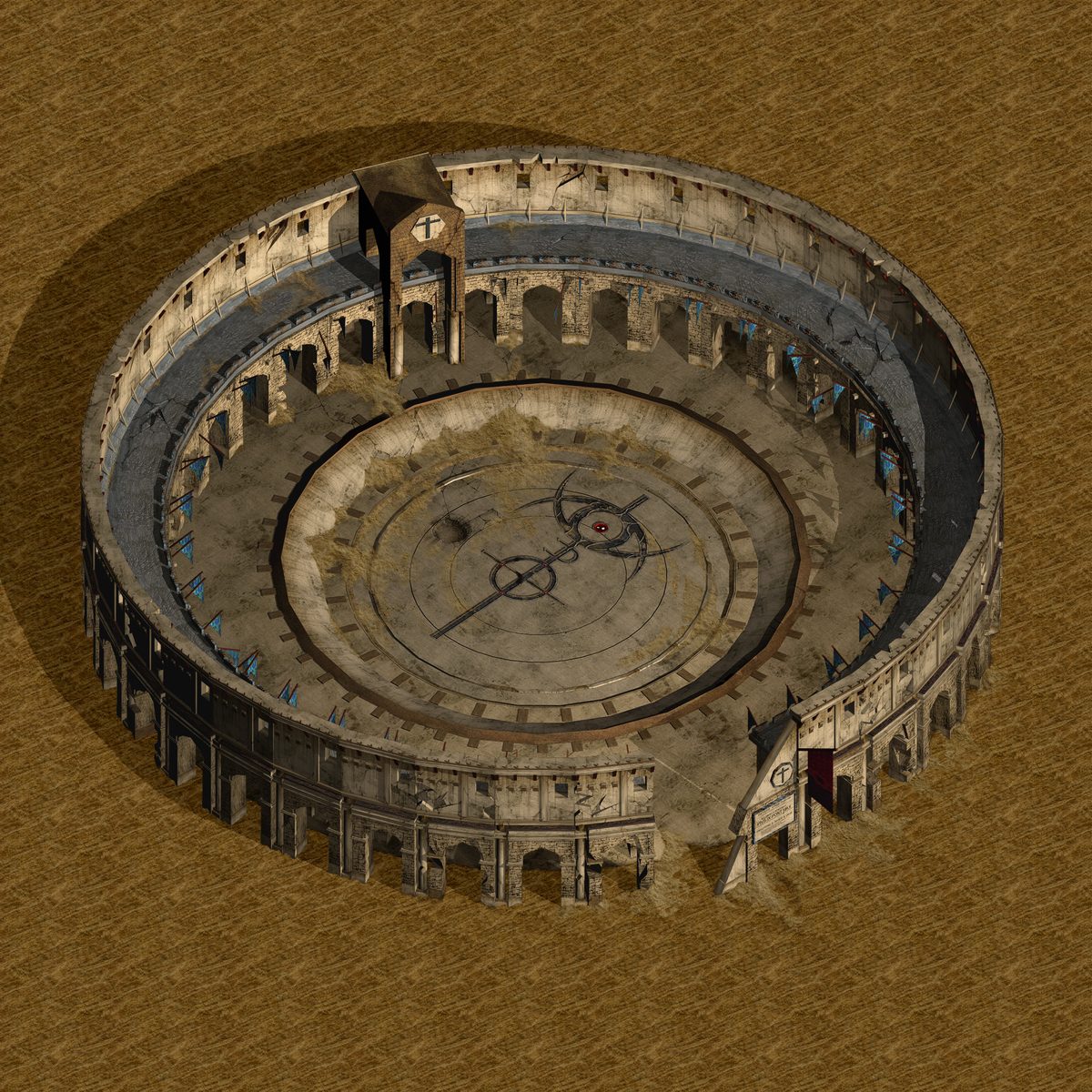
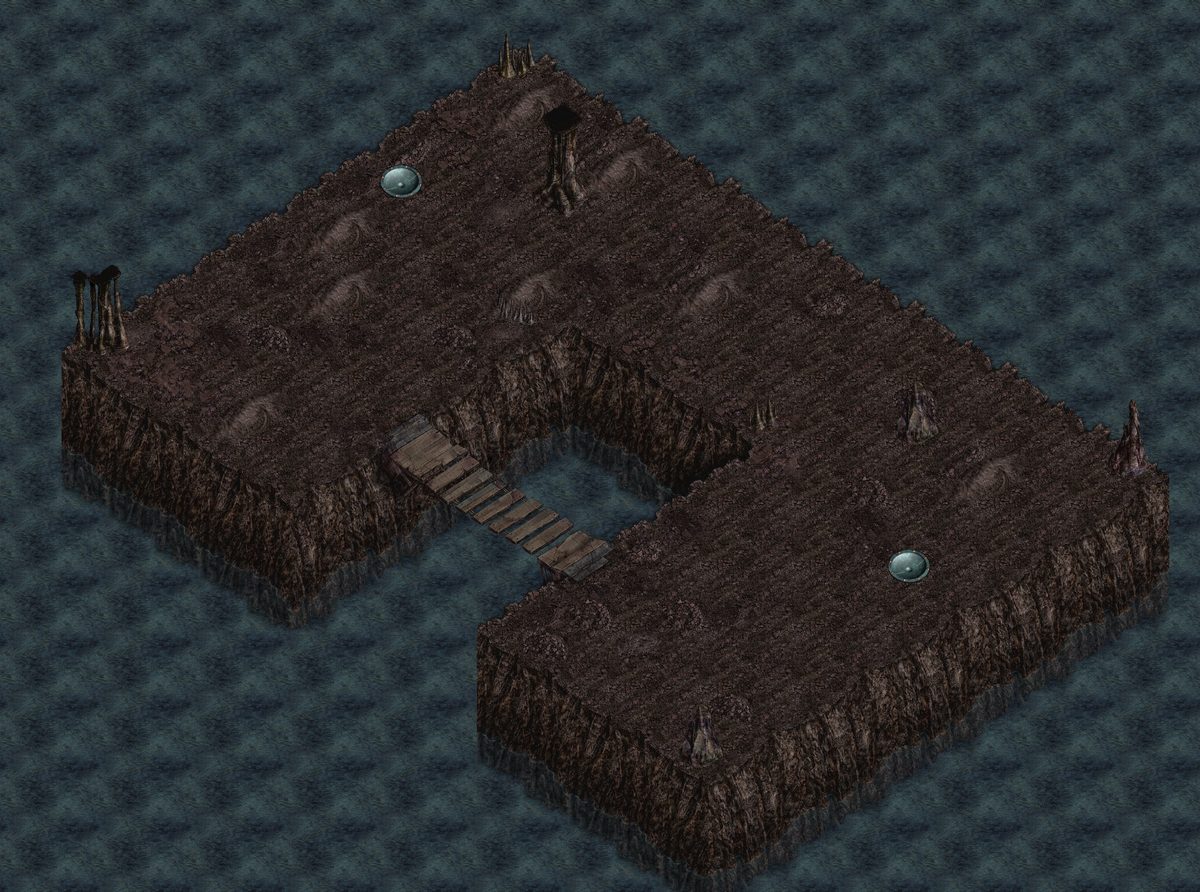
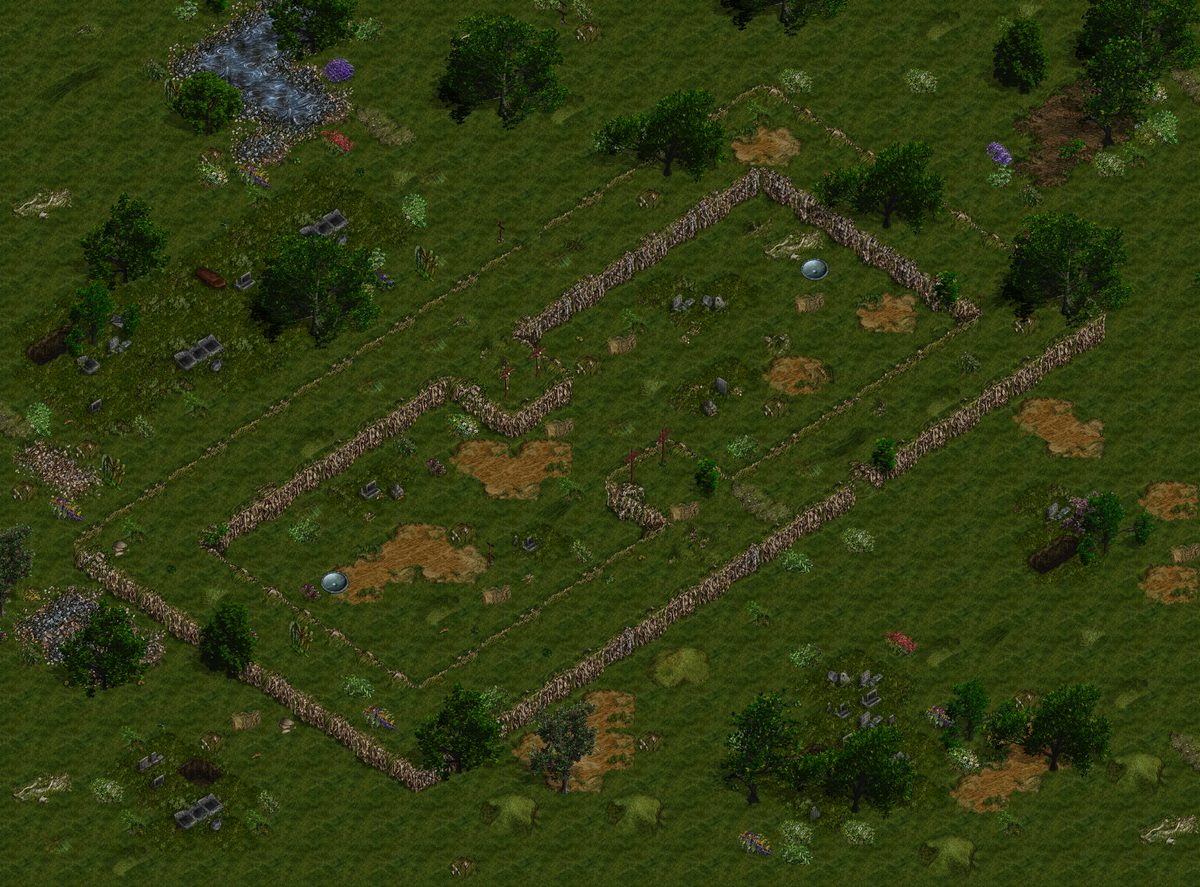
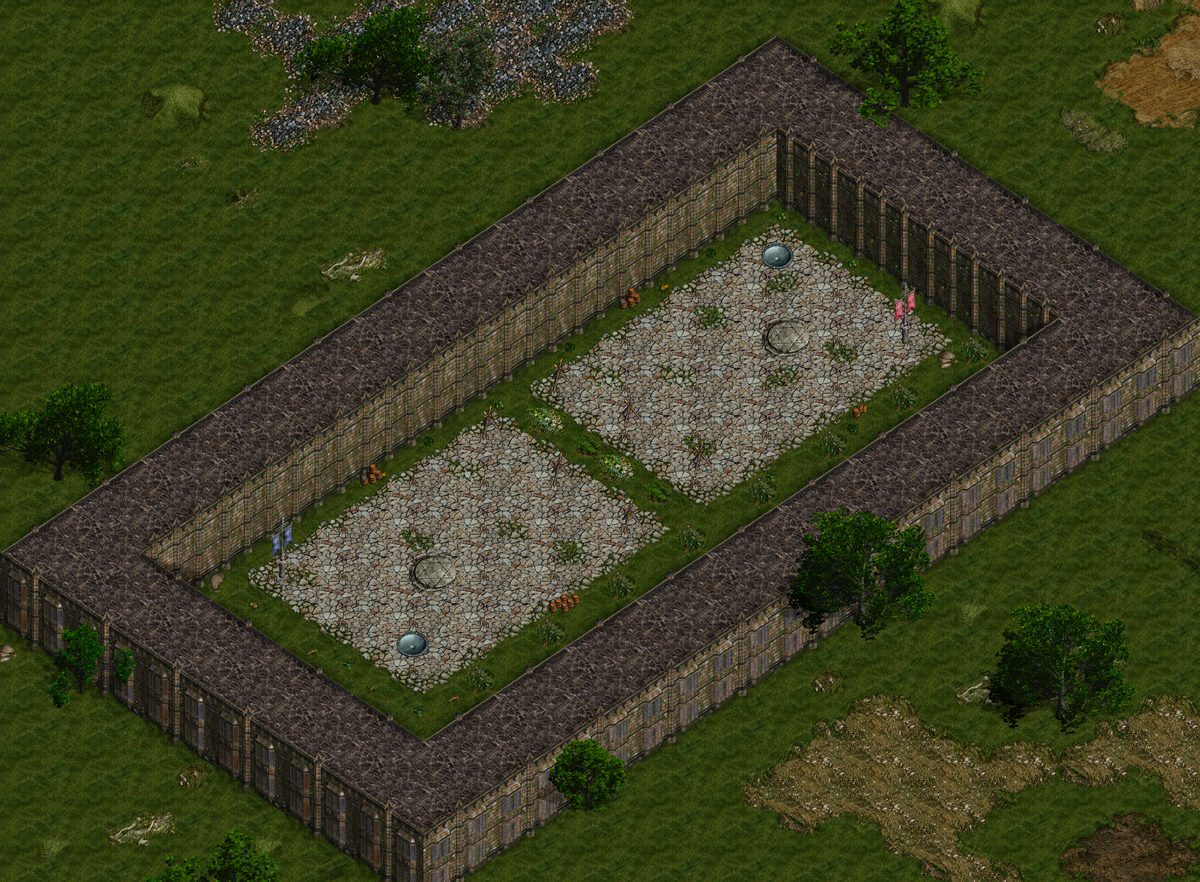
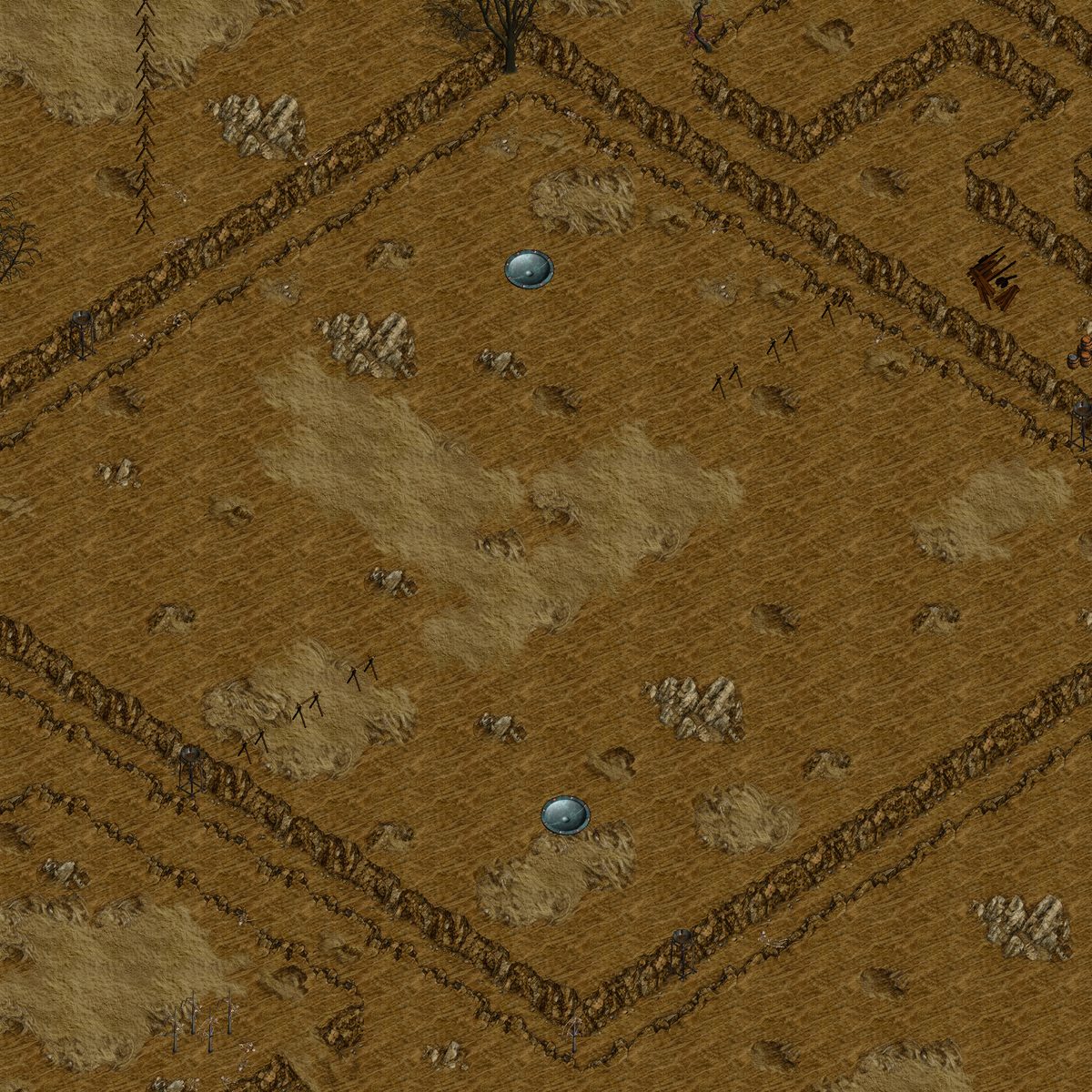
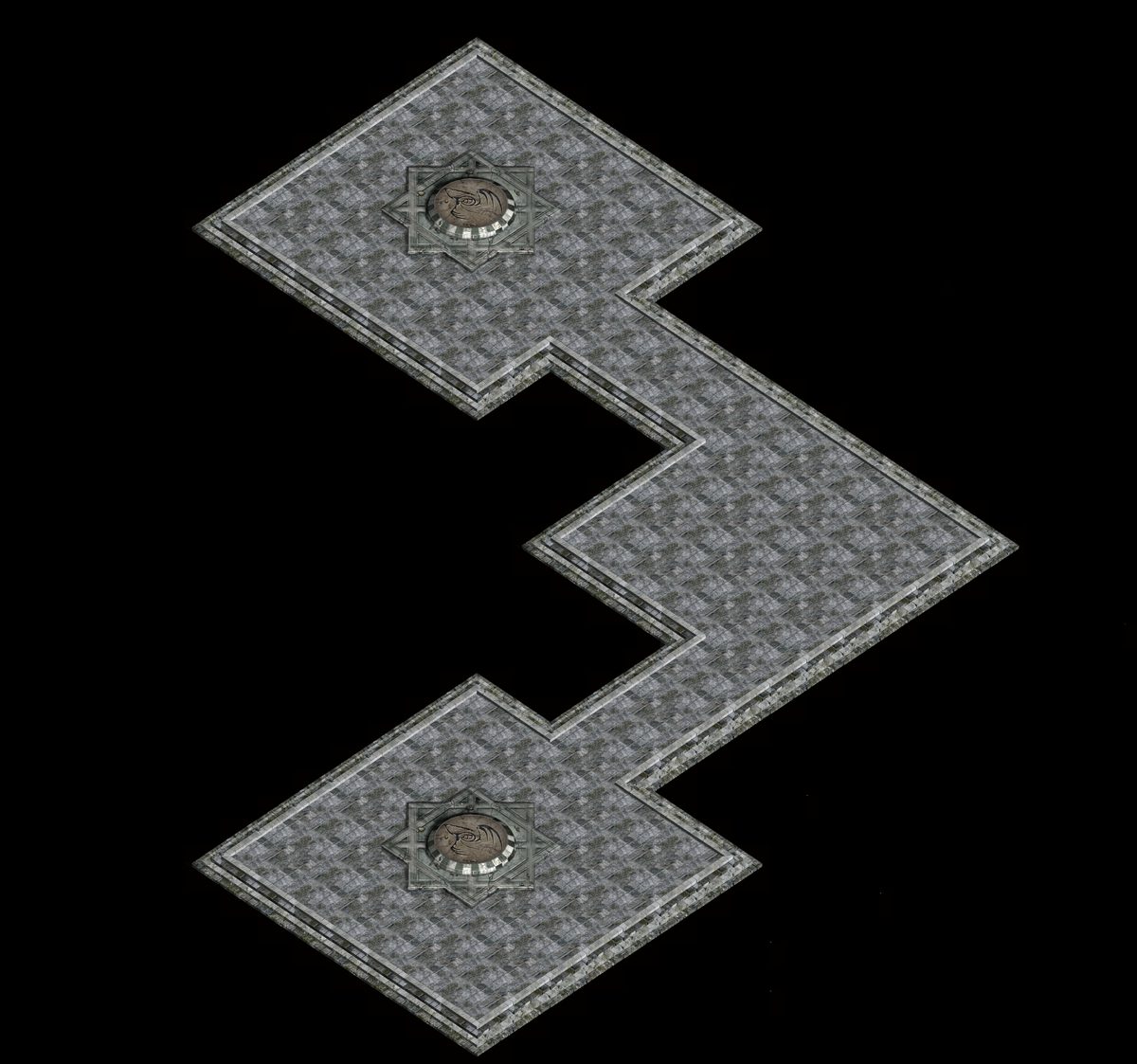
Both teams start on opposite sides of the map, out of each other's sight. The cages are only there for the first minute.